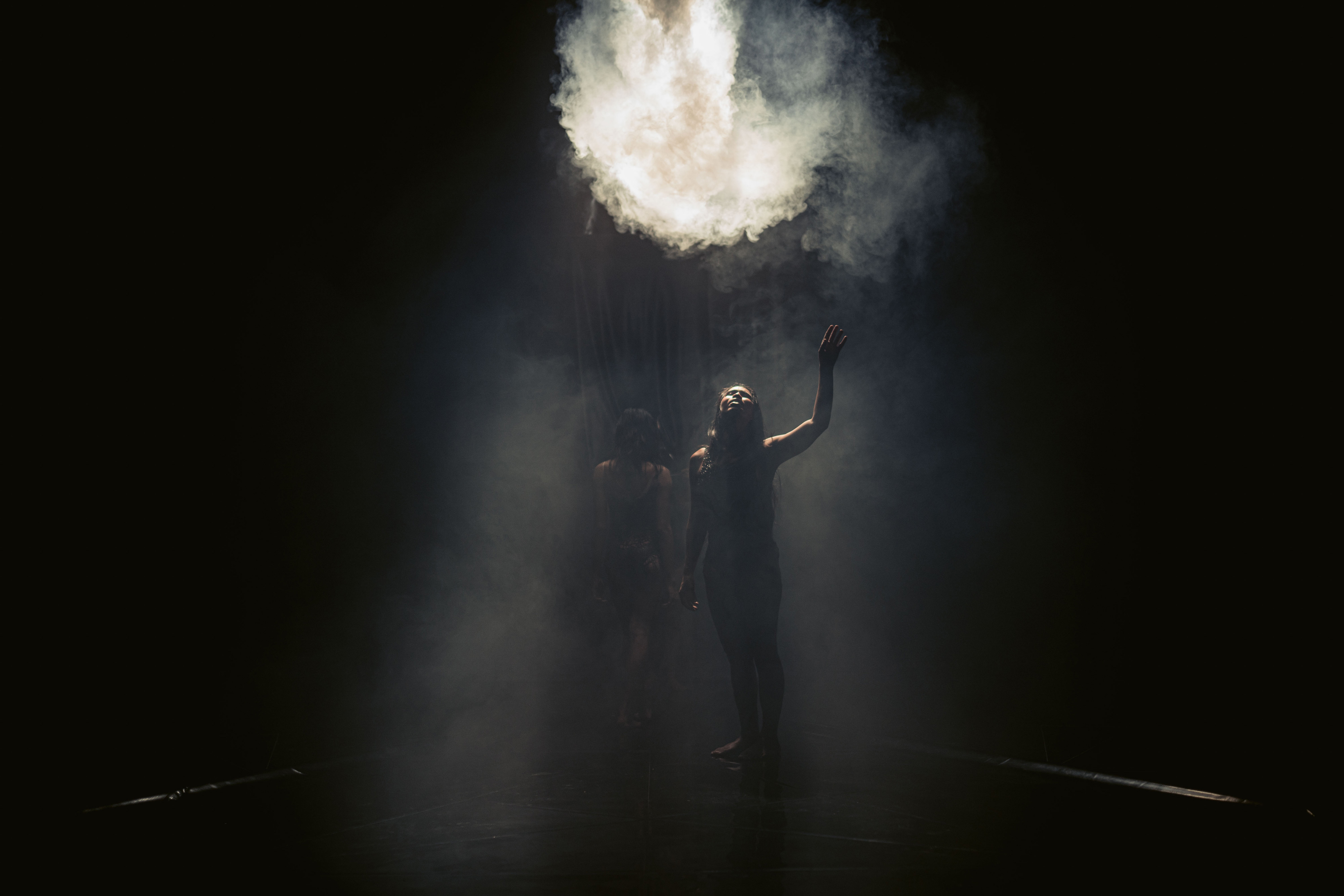
‘Farewell, my adored land, region of the sun caressed, pearl of the Orient Sea, our Eden lost…’ So begins José Rizal’s last poem Mi ultimo adios, an ode to the Philippines by the nationalist writer, physician, and face of the Philippine independence movement. The term ‘Pearl of the Orient Sea’ was first coined by Spanish missionary Juan J. Delgado in 1751 and its Tagalog translation was later included in the Philippine national anthem in 1960. The pearl represents a land imagined both as a colony and a nation, surrounded by the ocean and pressured by imperial powers into a shape increasingly hostile to its own people. It is difficult to revel in the natural beauty of the Philippines when inflation, poverty and hunger have escalated to alarming levels
under current president Marcos’ administration; when U.S. soldiers who murder trans women on Filipino soil are pardoned and climate disasters ravage the country as the Global North watches idly, denying all responsibility.
When there’s beauty, there is greed. Natural pearls formed without human intervention are extremely rare. Hundreds of pearl oysters must be gathered and killed to find even one wild pearl, and for centuries, this was the only way they were obtained. But humans wanted more than the earth was willing to give, so they began producing cultured pearls, which now make up the majority of those currently sold. But what might happen, what could be possible, if pearls were left to grow—if beauty wasn’t imitated or ripped apart?
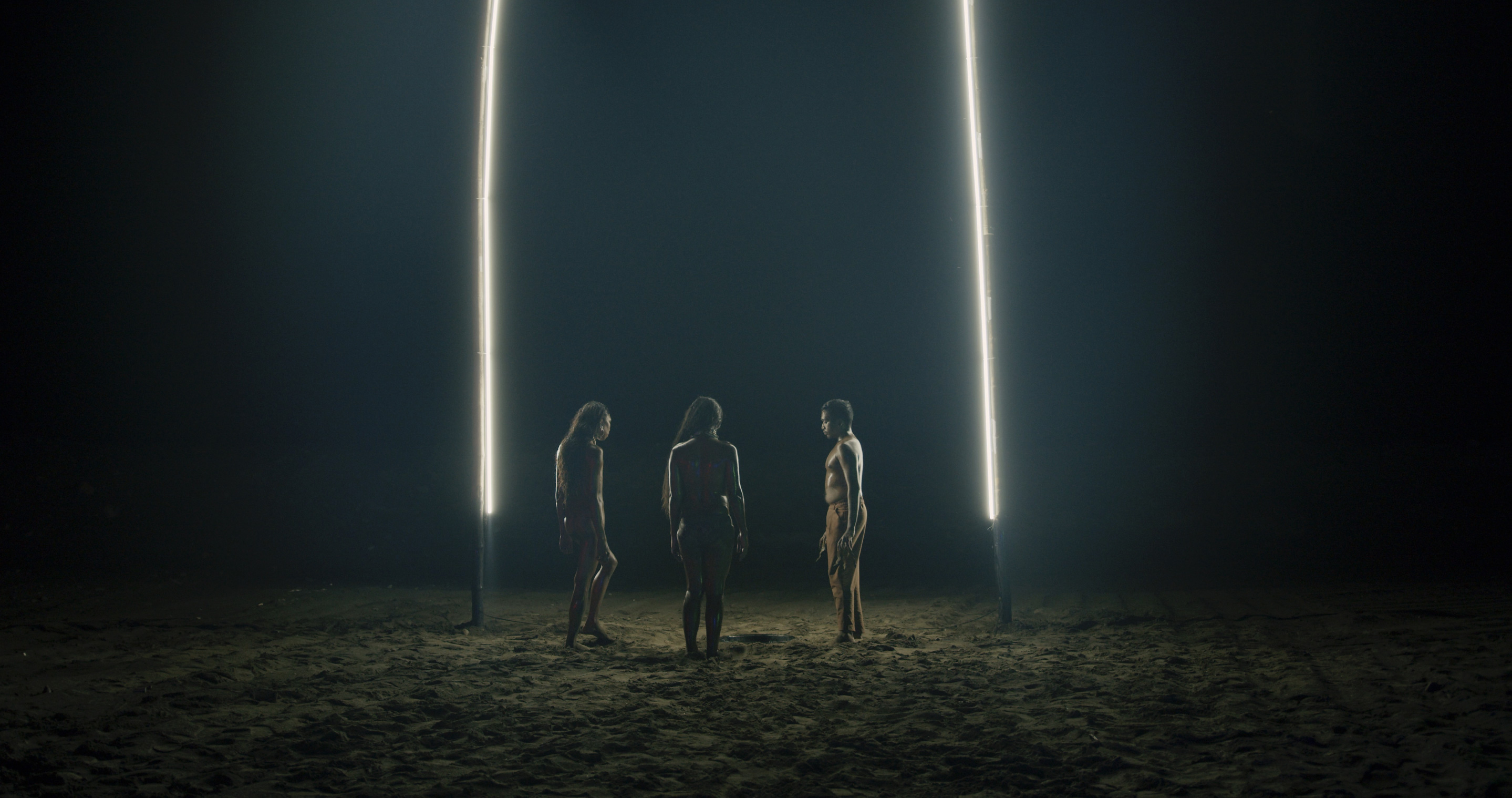
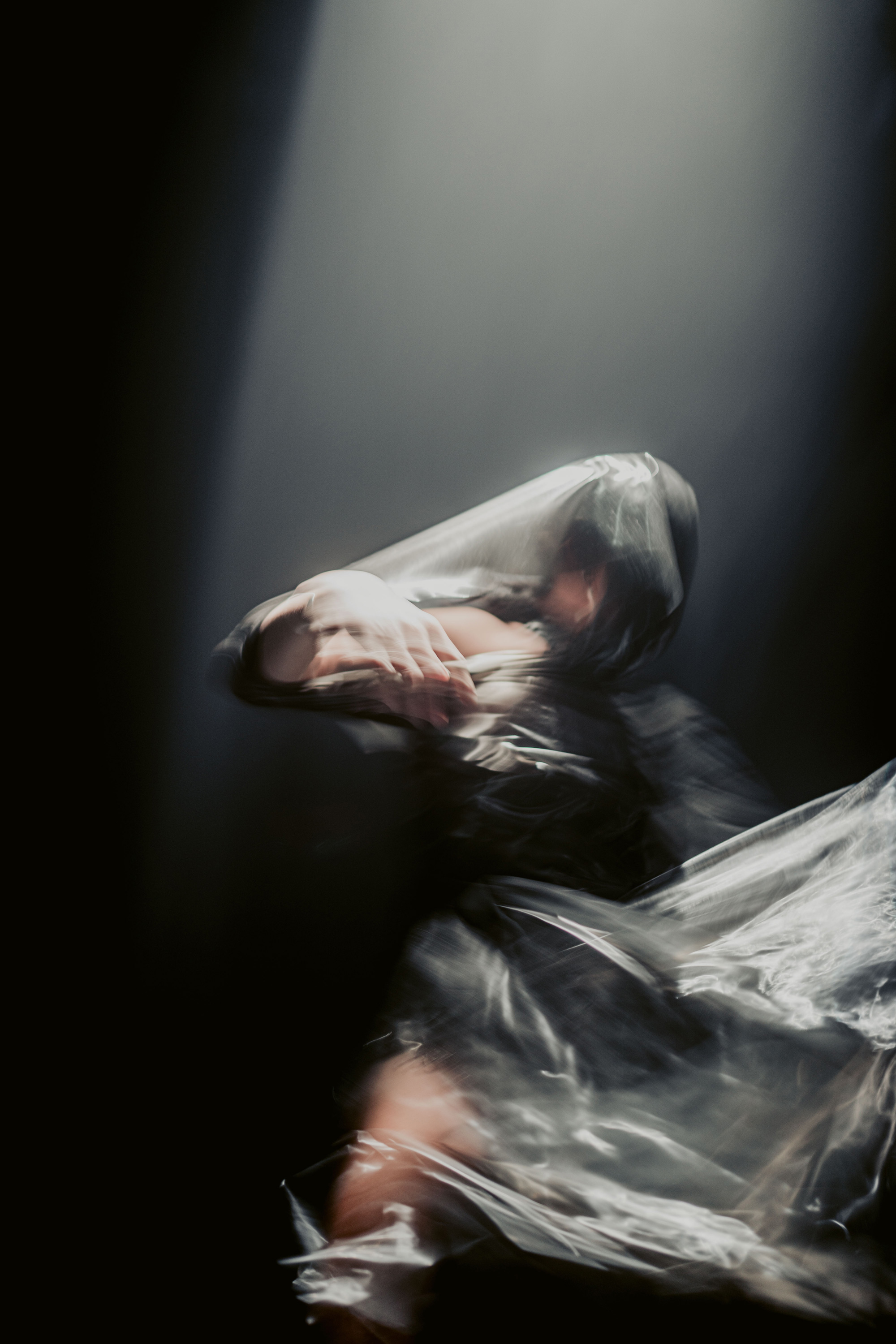
The Filipino artists and performers Joshua Serafin, Lukresia Quismundo and Bunny Cadag explore the answers to this question in their piece PEARLS, the third and final iteration of a larger piece of work titled Cosmological Gangbang. PEARLS comes in layers of dance, song and theatre—a piece written by and for the bodies of its performers, forever changing and growing, looking to heal both ancestral and current wounds. Trauma transforms into beauty, bodies become divine, history is rewritten and the future belongs to us.
To the queer and trans bodies of colour from the Global South and all over the world, Queer Bangladeshi author and poet Fariha Roisin writes in her newsletter How To Cure A Ghost: “Many of us understand that war is not inevitable, that mass consumption is wrong, that there are better ways of existing with each other, with this Earth, but we are so subdued and so embedded in the system that many of us are unwilling to re-route our destinies, our compulsions…our greed…yet, the ability to do this, is the very ascension many of us also seek; it’s the evolution that we crave.” PEARLS’ transformative powers hopefully won’t stop at the people who were involved in its creation but will be able to engulf its audience, ensheathing their fear, ignorance and complacency within this capitalist hellscape with layers of imagination, hope, care and beauty. Beauty in its purest form.
It’s a beautiful morning when I get ready to talk to Josh, Lukresia, and Bunny via video call. The sun reaches in through the floor-length windows of my friend’s Parisian apartment, covering the crisp white sheets of the bed in a warm, soft light. Outside, the city is already fully awake and the air promises yet another hot late summer day. We’ve been trying to make this interview happen for quite some time, so I’m really excited when the pixels on my laptop start taking the shape of three beautiful goddesses…
JANICE
Good morning, everyone. It’s so good to see you. Would you like to introduce yourselves?
LUKRESIA
Hi, I’m Lukresia. I’m a model, visual artist, and performer. I’m from the Philippines and now based in Berlin.
BUNNY
I’m Bunny and my pronouns are she/her. I’m a performance artist based in the Philippines. [Dogs barking, children laughing] It’s four in the afternoon here, just after classes. I live near the sea in a town called Nasugbu. These days I’m very fascinated with doll-making
JOSHUA
Hi, my name is Joshua Serafin. I’m based in Brussels but I’m also from the Philippines. I’m a multi-disciplinary artist interested in creating worlds based on worlds that have already been made or transforming those into something else.
JANICE
Let’s go back to how you met each other for the first time. What were your initial impressions of each other?
BUNNY
I met Josh when she was visiting the Philippine High School for the Arts to watch a friend’s show. The most beautiful thing I remember about Josh is how her energy would fill up the room; she could put on a show on the spot—a true performer. The first time I met Lukresia was during our creation period for Creation Paradigm and PEARLS in Las Casas, Filipinas de Acuzar. She was really feisty and powerful and I was a bit intimidated. After she greeted me I realised that she’s actually such a cutie with lots of light energy around her. The three of us have a good mix of energies. When we’re together, we’re just crazy. We’re angry together, we fight each other, we’re real to each other. It’s a sisterhood and I’m so glad to be part of it.
LUKRESIA
Meeting Josh was so beautiful. It was in a dark surrounding with neon lights all over, sweaty bodies, loud music…basically, we met at a party. Josh was drunk off her ass and saying, “Let’s work together!” [imitates drunk voice] And I was like okay cute, but she’ll probably forget about this the next morning. And then she didn’t, and eventually we met again in Las Casas. Like all queers, we immediately clicked but in a working environment I couldn’t read Josh at all yet; she’s very firm in her vision. This was also when I met Bunny. I was a little intimidated as well but I approached her first, and from then on we’ve been close
JANICE
So how did you start creating this project around the three of you, Joshua?
JOSHUA
I had known Bunny and her work for a long time but I was still really young then so I wasn’t thinking about creating work myself. Later, I met Lukresia at this party in 2019, and in 2020, Covid hit and I went back to Europe. But there was this yearning for a motherland, for the Philippines and its artists. I had been detached for too long and was going through a process of healing, so I was writing this whole cosmology of work about healing the community, ecology, and gender identity based on my own historical experience. The image of Lukresia and Bunny has always been quite present throughout this process. I like to invite people to create their own kind of avatars, gods and goddesses. To create a sort of Power Rangers—a mix of pop culture and many other things. That’s when I asked the two of them if they wanted to do Creation Paradigm but there was no concrete structure at that point, just the bodies of my collaborators
JANICE
PEARLS is part of the series Cosmological Gangbang which also includes Timawo, Creation Paradigm and VOID. Can you tell us more about the ideas and the research behind Cosmological Gangbang?
JOSHUA
I think this cosmology was an articulation of a lot of inspirations, images, and interests that I grew up with until now. Starting from fantasy video games I played as a child, to my mother’s stories and cultural identities from the Philippines. I did a lot of reading and went into the theories, histories and journeys of different cosmologies of the Philippines and other places I’ve lived. Were there any parallel narratives? On trips to the Philippines I would go and interview people as the research was supposed to centre our stories and narratives. We then got invited to Bukidnon by the Manobo and Talaandig communities.
BUNNY
We were immersed in this beautiful group of indigenous healers, and it was just like another world. It’s like a utopia in the mountains, and the force of nature and spirit are very strong there; you could really feel it. The way they would relate to each other and to us was very grounded. We also saw them perform, and you could feel just how alive they were. Even the children highly valued arts and art making. We were fortunate to meet a Balian who eventually introduced us to our own spirit guides and taught us a lot about the mythology of the mountains. It was a life-changing opportunity and strongly informed the creation of PEARLS. Every time we perform I bring that energy and it will look different everywhere, but that’s part of the journey.
-Michiel-Devijver-copy.jpg)
LUKRESIA
When we met in Las Casas, Josh reminded us that we have these divine beings already inside of us and gave us the task to envision them—as a goddess, an entity, a being. This was before Bukidnon, but it prepared us for our experience there.
JANICE
Can you still feel the connection to your spirit guides, even while being so far away in Europe or in an urban environment?
JOSHUA
We discovered that, in a way, our spirit guides are the work we do. We manifest these spirits in our artistic practice, like for me it’s this creature from the underworld I made a piece about. And of course, being in Europe we’re detached from nature. So the question is, how do we bring that kind of ritual or practice into this space? Now that it’s for a show it comes with a lot of pressure. But I’m glad that when we create the structure these places of sensation made it back into the piece. For us, our spirit guide is always kind of there and you just need to access them.
BUNNY
Developing work in the Philippines, near the sea, in the warm air with those beautiful sunsets really influences the way we think, dance and sing. When I came to Europe for the premiere in Belgium it was so cold and I had to resist this energy that was pulling me down. We had to keep pushing for what we wanted, and what we believed in. Being on tour, we’ve learned to recreate the warm, Filipino trans energy that we first developed this piece in.
JANICE
Each of you represents a different goddess in the world you created for Cosmological Gangbang.
Can you tell us more about these beings and how you embody and relate to them?
LUKRESIA
For me, this goddess is ember. There’s charcoal,
its stagnant form, which is black, and fireless. And then its burning form which is still flameless, but it glows; it’s seductive. It almost wants to be touched but if you touch it, you’re in danger, girl.
BUNNY
The beauty of what we have created with our goddesses is that they’re so related to our own experiences and artistic practices. Since 2015, I’ve been working on this character I call Vera Maningning, which translates to “truth” and “radiance” or “illumination”. She’s very much related to light, the sea, memory, harmony, femininity, and at some point motherhood.
JANICE
I wonder whether your goddesses are related to your astrological birth charts.
BUNNY
Yes, I think so. My sun sign is Sagittarius, my moon is Pisces and my rising is Libra.
LUKRESIA
My sun is Sagittarius, my rising is Virgo.
JOSHUA
I’m Libra, Leo. My character carries the name of a show I made which is called Void. It talks about the darkness, about its kindness and its beauty. This creature in the darkrooms, at the clubs, in different queer spaces. It’s a bit of a gremlin sometimes but it has a lot of softness, longing, and sadness as well.
JANICE
How are queerness and spirituality connected for you?
LUKRESIA
Queerness and spirituality have always existed in the pre-colonial Philippines, at least in our region of Cebu. We call the people who combine both asog, and they are highly regarded in society because of our belief that they embody higher beings. They do these performative dances, very much like what we do in PEARL.
JANICE
PEARLS dreams to rewrite history and speculate a possible future. Can you paint us the decolonial fantasy you’re dreaming of?
LUKRESIA
How I speculate a future with PEARLS is that it is all about us and not them. Since infancy, they get to decide who we are, at least on paper. But you should get to decide who you become.
BUNNY
I remember there was a main prompt we followed that asked what our trans bodies would look like if we hadn’t been programmed as religious children of conservative families. We asked ourselves how pearls are created under the sea and how we relate it to our bodies. How are our bodies shaped by the conditions of society, the political environment, and culture? How do we transform them into beautiful and kind beings in this world of cruelty and hate? Even if it’s really hard to do, how do we remain soft and gentle? I’m quoting Josh here: “It’s hard to be kind if the world isn’t kind, but it’s a responsibility.” Trans people are one of the most vulnerable groups, but we’re pushed to give and to understand. We’re always learning and transforming. This sisterhood teaches us so much that the world cannot.
-Michiel-Devijver-copy.jpg)
JANICE
What does being Filipino mean to you? How does it influence your art and the way you approach decolonization?
LUKRESIA
As Filipinos, we have a long history of being left to the dust. We fight, we fight, and we fight. For example, we were already fighting Spain before the U.S. came and attempted to “save” us, trapping us in yet another imperial history. Being treated as dust or essentially garbage is a running theme in my practice with fashion, where I work with a lot of materials that are left behind.
JOSHUA
I’ve been away from the Philippines for almost ten years. During my time in Europe, I kept asking myself, what does it mean to be Filipino? Does my body still belong there? What am I now, in all these different places? But in the end, the Philippines will always call me back. The ancestral body is always there, wherever I go. Actually going back and feeling the water, the stickiness of the air, the earth, and the taste of the food helped me heal so much. In relation to my practice, being Filipino means being water— constantly adapting, changing…wherever you put Filipinos, we will survive. Being Filipino is not a nationality; it’s a state of identity that continues to shift our perspective to ward the rest of the world.
BUNNY
It’s so beautiful to be brown in another country. It’s so beautiful to have this nose, this long black hair, to have this skin. I couldn’t be more proud to be Filipino when I’m in another country. But living in the Philippines as a Filipino is so hard. Don’t come here, we’ll come to you. [laughs] Even the word “Filipino” is a colonial term, coming from King Philip of Spain. Five hundred years later, we’re still under the influence of Western ideologies of culture. The Filipino body is multiculturally programmed; it doesn’t have a distinct look or voice. Anybody can be anything—which doesn’t mean that it’s a free country, unfortunately. Being a Filipino trans body is a different world
JANICE
What has it been like to perform PEARLS in Europe? How was the reception?
JOSHUA
From my experience, if you’re a brown artist in Europe, you always need to talk about your identity. When we made PEARLS we had a high emphasis on not giving in to that kind of perception. A lot of the texts aren’t translated when we speak Tagalog, Filipino, or Cebuano. In the Philippines, things are always happening all at once and PEARLS has been like that too. We sing, we dance, we joke around, and suddenly there’s a drastic change. If you’re not used to this kind of constant change our piece can be a little hard to read. I really wanted to make this for my people, for the Filipinos, the brown girls, the trans bodies, the queers. It wasn’t made with a white audience in mind but still invites them to this space of coming together.
JANICE
And people were open to being a part of it?
BUNNY
So far, people have always joined. These two girls have a very seductive
energy; they’re like “Love us, love us” and once they’re loved they start
slamming them on the ground. [Everyone laughs]
JOSHUA
It’s always this kind of seduction that then shifts into something else. .
JANICE
What does it feel like to be on stage? Do you have any rituals before or after the performance?
LUKRESIA
We love incense. All of us gather together and light incense, and do breathing exercises, as well as frequency and energy exercises. Before our performance starts, we’re in different parts of the stage. I’m behind the veil and there I think of my ancestors and remind myself of the Philippines. Most importantly I call on my departed aunt to help me get through the show.
BUNNY
And after the performance we normally crave Asian food—comfort food.
JANICE
Can you tell us more about the outfits you wear on stage, and the way they translate the story?
JOSHUA
The process of creating the costumes took around six months. It was a collaboration with costume designer Katrien Baetslé who is based in Gent. I told her what I imagined for the costumes, that I wanted to work with latex, that I wanted our bodies to be seen and then she basically hand-drew them. They’re all fabricated on each of our bodies so it was definitely a long process. The shape and texture of the costumes are actually based on a dried coral that Katrien has acquired on one of her journeys.
JANICE
With PEARLS being the final installation of Cosmological Gangbang, what kind of growth or change have you witnessed within yourself and the others since the start of the project? What did you learn or what did you let go of?
LUKRESIA
This is my first performance work and I couldn’t be any happier to have done it with Josh and Bunny. They were so patient with me and basically the best teachers you could ask for. When I first met Josh, she was this feisty girl who knew what she wanted, but I could also sense a lot of pain and anger. It was so beautiful for me to see her slowly transform into a more contained person. I’m so proud of this doll conquering the world. Throughout the creation period, I’ve lived the most with Bunny and I know her in a telepathic way; she’s my sister from the beginning to the end.
BUNNY
I’ve learned to be in touch with my voice again, and also with my performative body. Collaborating with Josh is the first time that I’m going back to performance after a long time of being confined because of the pandemic. It’s a new world for me because technically it’s theatre and dance, but to me, what we’ve created feels like something else—something deeper and more grounded. I was doing hormone replacement therapy when we started this project and I’ve never been happier than when influencing these girls to transition as well. It’s a sisterly practice to inject each other and continue this journey.
LUKRESIA
For a journey you need fuel, and hormones are the fuel.
BUNNY
At least for me, transitioning has informed the work and my whole system altogether. Lukresia and Josh have known me since the early stages of my transition, and I trust these girls more than any other collaborators ‘cause I can be my truest self with them. I want to keep growing together.
JOSHUA
PEARLS is my first big production so there was a lot of pressure, but I think I’ve grown a lot as a maker with this piece. It was a beautiful and challenging journey at the same time. In the piece, we’re talking about healing, liberation, and kindness, and in big productions, these kinds of things are often left out because people regard them as just work. For PEARLS the challenge was to turn the process into a space of healing which required a lot of listening, acknowledging, and being present with oneself and everybody else.
JANICE
Thank you so much for sharing and taking the time for this conversation!
